When You're Afraid of the Next Panic Attack

Panic Attacks Don't Have To Run Your Life

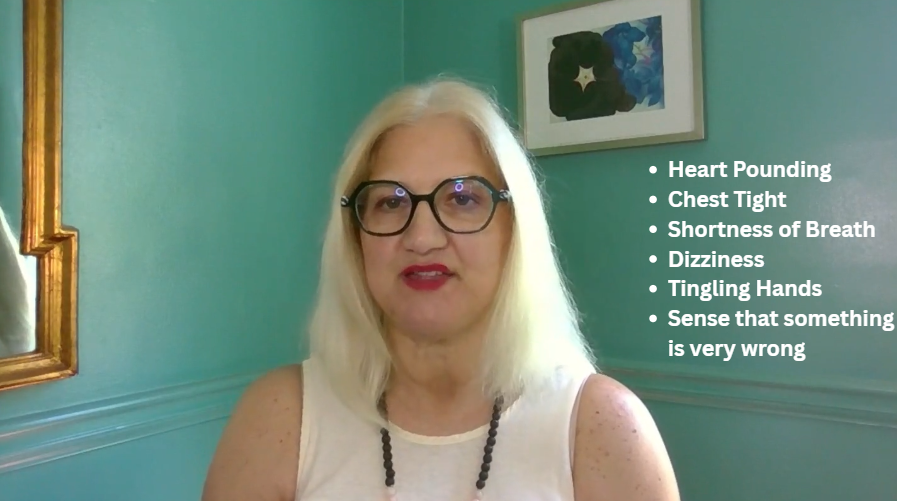
The first panic attack usually comes out of nowhere. Your heart pounds, your chest gets tight, your hands tingle, and you’re suddenly sure something is very wrong. Maybe you ended up in the emergency room, and maybe they told you your heart was fine. That should have been a relief. Instead, it left you with a new question: if it isn’t my heart, what happens the next time?


That question is the real problem. Panic disorder isn’t just having panic attacks. It’s what happens when you start organizing your life around making sure you never have another one.


What panic disorder looks like day to day:

It might look like taking back roads so you never get stuck on the highway, sitting on the aisle at every meeting and movie, keeping a water bottle and your phone within reach, or quietly skipping coffee and workouts because a racing heart feels too much like the beginning of an attack. Maybe you check your pulse, or you’ve stopped traveling, or you only go certain places if someone you trust comes along. From the outside, you look fine. On the inside, you’re always scanning for the exit.
 

Why the usual advice keeps it going

Most people with panic have been told to breathe deeply, distract themselves, or avoid what sets it off. Those things can take the edge off for a minute, but they also send your brain the same message every time: that feeling was dangerous, and you barely escaped. The more you try to control, argue with, or muscle through panic, the more exhausted you become, and the more your body treats ordinary sensations as an emergency.

What treatment actually looks like


Treatment works the other way around. Instead of trying to make the sensations stop, we teach your brain that they aren’t dangerous, and the way to do that is to feel them on purpose, safely, with me right there.


  1. Understanding the cycle. We map exactly how your panic works: what you notice first, what you tell yourself about it, and everything you do to feel safe.
  2. Facing the sensations. In session, we bring on the feelings you’ve been avoiding, a racing heart, dizziness, breathlessness, using simple exercises like spinning in a chair or running in place. It’s uncomfortable, and it’s also the fastest way to learn that you can handle it.
  3. Taking back the places. We gradually return to the situations you’ve been avoiding, the highway, the grocery store, the crowded room, and we drop the safety behaviors one at a time.
  4. Doing it without me. The goal is for you to have a racing heart and shrug, without needing a plan or a person to get through it.
  5. All of this works well by telehealth, which also means we can practice in the real places panic shows up, like your car or your kitchen.


Before we start

If you haven’t had a recent medical checkup for your symptoms, I’ll ask you to get one, so we both know we’re treating panic and not something else. Many people with panic also take medication, and I’m happy to coordinate with your prescriber.

Helpful Information About Panic Attacks

Playlist

3 Videos
Theresa Schaffer, LCSW, Anxiety Specialist in Atlanta | Online Atlanta Substance Use Counseling | Theresa Schaffer | Online Anxiety Therapy Delaware | Anxiety Therapist in Delaware | Theresa Schaffer | Online OCD Therapy Delaware | OCD Therapist in Delaware | Theresa Schaffer

Theresa Schaffer

Licensed Clinical Social Worker · Anxiety & Panic Specialist · Atlanta, GA


I’m not here to tell you to just breathe.


I’m here because I’ve watched too many people spend years being told to “manage” their panic, when what they actually needed was to stop having it.


If you’re tired of coping and ready to actually recover, let’s talk.